A home charger for the VW e-Golf
The VW e-Golf with the 35.8 kWh battery has a two-phase 7.2 kW charger: Volkswagen gives 5 h 20 min on a three-phase wallbox and 10 h 50 min at 3.6 kW. The older 24.2 kWh e-Golf takes 3.6 kW at most, so a heavy-duty socket is all it needs.
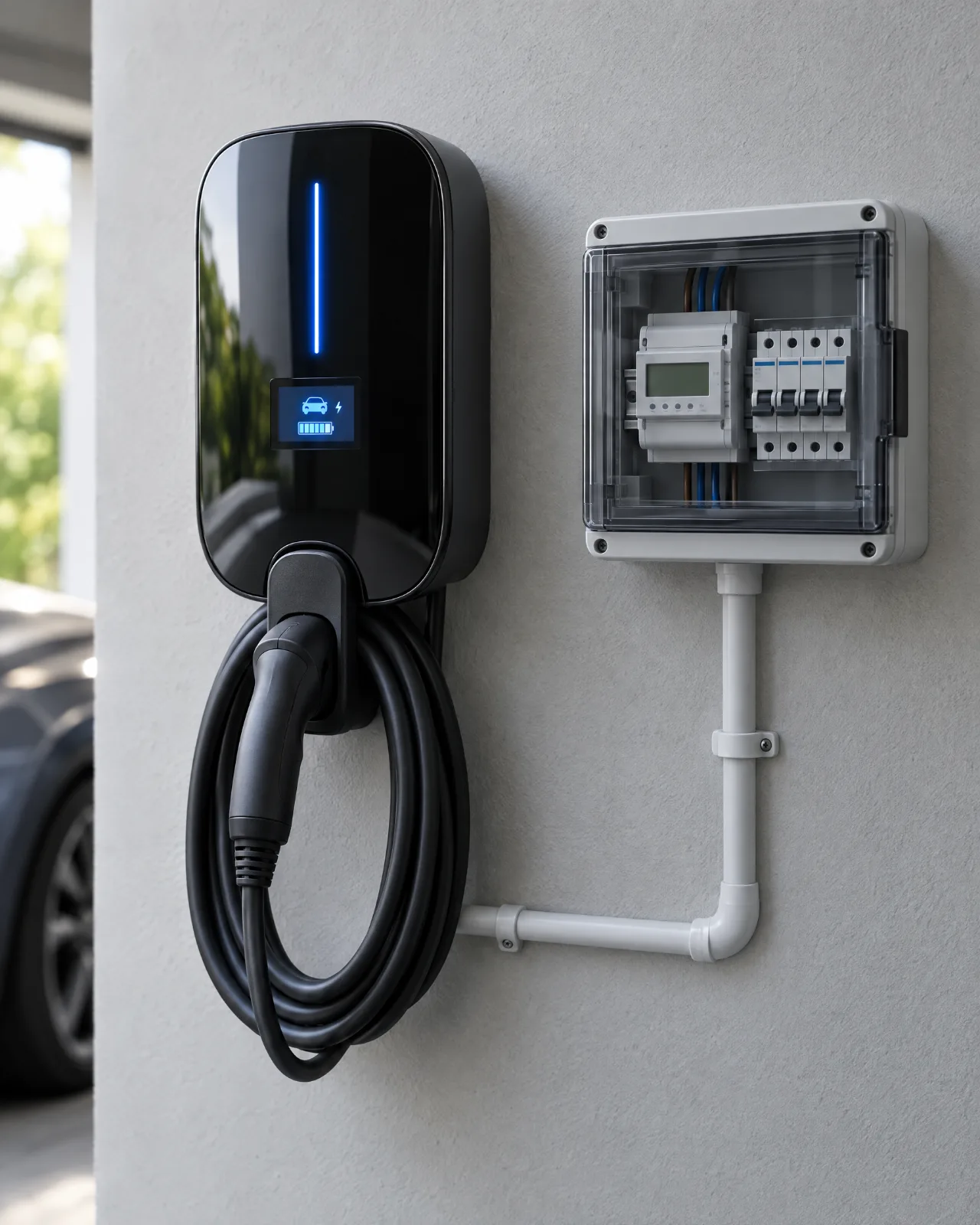
How much power the VW e-Golf takes
A single-phase on-board charger uses one phase. WALLBOX 11 kW is three-phase, 16 A per phase, so such a car takes 3.7 kW at most on it. A two-phase charger uses two phases at 16 A each, so on a three-phase 11 kW wallbox it takes its full 7.2 kW.
Charging at 7.2 kW only works on a three-phase charger: the car uses two phases at 16 A each. On a single-phase 16 A charger the same car takes 3.6 kW.
Volkswagen quotes the nominal battery capacity, 24.2 and 35.8 kWh; the ADAC catalog gives 20.5 and 32.0 kWh usable.
DC fast charging (CCS, up to 40 kW) was a paid option in some markets, so check whether a used e-Golf has the CCS inlet.
How long charging takes at home
The times are our own calculation for charging from 0 to 100%: battery capacity plus 10% losses, divided by the power. Charging slows down toward the end, and losses are higher on a socket (ADAC measured 12.7–24.2% at 2.3 kW and 5.1–7.0% on an 11 kW wallbox), so the real time can be longer.
START is a heavy-duty socket on its own circuit, with a MID meter: the car charges through its portable charger, at 2.3 kW (10 A) or 3.7 kW (16 A), depending on the portable charger.
Manufacturer’s figures. e-Golf 24.2 kWh, to a full battery: 2.3 kW — 13 h, 3.6 kW — 8 h. e-Golf 35.8 kWh, to a full battery: 2.3 kW — 17 h, 3.6 kW — 10 h 50 min, 7.2 kW — 5 h 20 min.
What a full battery costs at night
A night kWh in the blue zone costs about 6 RSD with all fees and taxes — 5.70 RSD to be exact, under the EPS price list in force since October 1, 2025.
The price applies with a dual-tariff meter and consumption in the blue zone; in the red zone, above 1.200 kWh a month, a kWh costs more. On fast public chargers, receipts from August and September 2026 put a kWh at 43 to 79 RSD.
How much charging adds to the monthly bill is covered in the guide how much an electric car adds to your electricity bill.
Which package fits
For the 35.8 kWh e-Golf, WALLBOX 11 kW halves the charging time compared with a heavy-duty socket, because the car uses two phases on it. For the 24.2 kWh e-Golf a wallbox is no faster: the car takes 3.6 kW on the socket and on the wallbox alike, so START is the sensible choice.
The package price is final and includes the charger and basic installation next to the distribution board: up to 2 m of cable, an RCD (FID) and a circuit breaker. If your spot is farther from the board, the cable and other work are priced at the assessment, before any work starts.
Wallbox Plus (from 115.000 RSD) and Wallbox Premium (155.000 RSD) are described under packages and prices.
If you’re still shopping for a used car, see where to buy one and what to check: used and imported electric cars.
FAQ
Why doesn’t an e-Golf charge at 11 kW on an 11 kW wallbox?
Because the on-board charger uses at most two phases at 16 A each, which is 7.2 kW. The wallbox offers 11 kW, and the car takes as much as its own charger can.
Is a heavy-duty socket enough for an e-Golf?
For the 24.2 kWh e-Golf, yes: Volkswagen gives 8 h at 3.6 kW. For the 35.8 kWh e-Golf it gives 10 h 50 min, so a full battery doesn’t fit into the eight lower-tariff hours, but a daily top-off does.
How much does it cost to install a charger for a VW e-Golf?
START is 39.000 RSD, and WALLBOX 11 kW starts at 94.000 RSD (104.000 RSD with a MID meter). The price is final and includes basic installation next to the distribution board; anything beyond that is priced after the assessment.
Sources
- Volkswagen Slovenia — e-Golf catalog (December 2018)
- Volkswagen Newsroom — e-Golf: charging concept and charging equipment (2014)
- Volkswagen Newsroom — The e-Golf, IAA 2019: key aspects
- Volkswagen New Zealand — e-Golf MY20 spec sheet (dealer-hosted copy)
- ADAC Autokatalog — VW e-Golf 35.8 kWh (usable capacity, number of phases)
- EPS — electricity prices for guaranteed supply (from October 1, 2025)
- Household electricity prices in Serbia: zones, tariffs and levies (as of September 23, 2026)
- ADAC — study of charging losses on a socket and a wallbox
- Fast charging in Serbia: 43 to 79 dinars per kWh (September 22, 2026)
This page was written with the help of AI tools based on the sources listed, and the data were checked on November 16, 2026. If you spot an error or have newer data, let us know at hello@evolako.com — we publish corrections with a date.
A charger for your VW e-Golf
Send photos of the distribution board and the spot for the charger — a rough estimate from photos is free, and we reply within 48 hours.
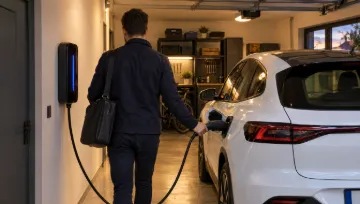
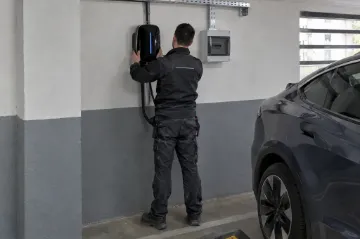
Home charging for apartment residents — installation, MID meter and billing down to the dinar.
The iPhone and Android app is coming soon.
Let me know when it’s out →
ANDREI SMEKHOV PR NOVI SAD · Katolička porta 6/3, 21000 Novi Sad · Reg. no. 68853834 · Tax ID 116047038 · Accessibility